The “Why Not?” Trip

About a year ago we started lightly kicking around the idea of taking time off work to travel. Now it’s actually happening. We are leaving in July. We expect to spend around 3ish months road tripping.

Only one campsite reservation has been made for one night, so the trip is pretty wide open. But so far it’s looking like….Montana, Canadian Rockies, BC, Washington, Oregon, California, Nevada, Arizona, Utah, New Mexico, Colorado, Wyoming and Nebraska.

When we first started testing this idea of travel out on unsuspecting friends and family- we wanted to hear how it sounded coming out- did we believe ourselves? Could we really give this a try?

One of the best responses we received was from a family friend who shared this story:

It’s from a commencement address attributed to Brian Dyson, who held several senior management positions with Coca-Cola during his long career. He told a class of Georgia Tech graduates, “Imagine life as a game in which you are juggling five balls in the air: work, family, health, friends and spirit. You’re keeping all of these in the air.

“You soon understand that work is a rubber ball. If you drop it, it will bounce back. But the other four balls are made of glass. If you drop one of these, it will be irrevocably scuffed, marked, nicked, damaged, or even shattered. It will never be the same.”

We knew it was true.

And we realized this trip would be giving space for nurturing and growing our faith, relationships, and hopefully our health too.

If you live in or have connections in these areas and want to give us recommendations of places to see or people to stay with- we’d love to hear about it. Please share your tips in the comments!

It’s time to bounce that rubber ball! 

Doing the Right Thing- Taking a Sabbatical

13483062_10155033231898475_7921917735980785959_o

Photo by Andy in Badlands National Park

Andy and I have made the decision to travel for a few months. A whole bunch of prayer, conversation, and planning with calculators, library travel books, and maps have led to this choice.

We talk about this travel time in a bunch of different ways. There are a couple words we keep coming back to in an effort to describe it. We’re hitting the pause button on our day to day life, or maybe more of a “reset.” A time to try something different.

Taking a few months off is a risk, to be sure. And this trip is also full of potential to be restful, refreshing, and maybe even life changing? It’s been a tough few years in some key areas of our lives, and we’re looking at this time as a sabbatical of sorts.

The word sabbatical comes from the biblical word “sabbath” which reflects the human need to stop and rest. Shabbat in Hebrew literally means a “ceasing”. Other language describes a sabbatical as simply a break from work.

While we are on our road trip we will take time to reconnect with each other, and with family and friends we’ll visit along the way. When we’re not bumming a spot on someone’s couch or spare room, we’ll be camping and exploring National Parks. 

In some ways, this was a really easy choice to make and in some ways it was hard. But mostly it came down to the fact that we had talked about it so much- we knew if we didn’t give it a try, we’d always regret it. And we knew if we actually did it, we’d never regret it. The short question we asked ourselves was, “Why not?”

I saw a photo of a piece of paper on Instagram recently with the handwritten words, “I did the right thing for me.” The note was a reminder for when they’re making big decisions filled with risk and possibility to make decisions based out of love instead of fear. I really like that way of thinking, especially as it relates to our desire to take this sabbatical.

After all the prayer, conversation and planning, in this moment of time– this is a good thing for us.

Being Mortal and Living Soft

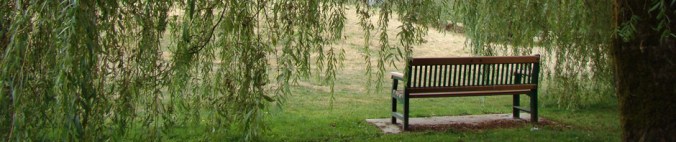
WILLOW TREE BENCH

I’m reading the book Being Mortal by Atul Gawande and it’s fascinating. It’s about growing older, allowing people to maintain independence and dignity as they age, while giving opportunities to continue to live.

He’s done a crap ton of research and the stories he shares are captivating. My favorite so far is from a woman who had a near death experience at age 21. Before the car accident she had spent her time thinking about finding the right person to spend her life with and what she was going to do next in life. After the accident, her perspective changed to not caring about those things at all, she just wanted to spend more time with loved ones because she was so grateful to be alive.

She wondered if how we choose to spend our time depends on how much time we think we have left in life. So she did studies.

Her theory was that “When horizons are measured in decades, which might as well be infinity to human beings, you most desire all that stuff at the top of Maslow’s pyramid- achievement, creativity…. But as your horizons contract- when you see the future ahead of you as finite and uncertain- your focus shifts to the here and now, to everyday pleasures and the people closest to you.”

I watched this happen to my brother. My dad described him as “soft” the closer he came to the end of his life. And I think that is the best word for it. Little things that used to get him riled up, he barely flinched at, in fact, he took a couple opportunities to chastise my mom when we would get worked up over things. He waved his hand and told us, “It doesn’t matter” and “you need to let that go.”

On the anniversary of his death this year, I was laying in bed staring at the ceiling and talking out loud. It was part prayer, part thoughts. I was trying to determine what Justin had taught me that was the most valuable. And I realized it was this- this softness that my dad talked about. How could I learn to live like that?

I saw the shift in my uncle TJ too, as he realized the days he had were a gift, not a guarantee. Almost nothing ruffled him. It was the littlest things that made him the happiest. Spending time with people he loved was his favorite, and my brother’s too.

I feel like I get the spending time with people I love part, but I am terrible at the not letting little things (that truly don’t matter) irritate me part.

In the studies this woman did, she saw this shift in perspective based on people’s age. The younger ones valued time with people they thought could teach them something new and they valued building new relationships. The older ones valued time with people they were emotionally close to. And when they studied people who were sick with a terminal disease, whether they were young or old, they all responded the way of the older people. And to further verify her findings, when the older people in the study were told that a new development would allow them to live 20 extra years, they all shifted their responses to value the things of the younger people.

Then, they studied people in different cultures just after a big event occurred where lots of people died. For the US, it was following 9/11. “In each case the results were consistent. When, as researchers put it, “life’s fragility is primed,” people’s goals and motives in their everyday lives shift completely. It’s perspective, not age, that matters most.”

Death can have that effect on us as humans. For me, my brother’s death was a total wake up call and a shift in perspective. I realized that if he could die, anyone could. And yes, I realize how stupid this sounds because in reality- we will all die at some point. Side note: My uncle used to tell the story of the doctor telling him he was dying. He quickly quipped, “So are you!”

One thing my brother’s death did was normalize conversations about death. Andy asked me just a few weeks after my brother died, what I would do if he died. I told him I’d sell the house, I’d take a break from work to grieve and I’d probably travel. When I asked him the same question he had the same answers, plus he specified he’d visit my friends and ask them to tell him stories about me. I told him his idea was sweeter than mine and now I’d want to do that too, for him.

Once we acknowledged how easily one of us could die, it caused us to narrow in on some of our dreams and figure out what do we want to do before we die. But even more so, how do we want to live?

If I want to be a softer person who lets things go, doesn’t read into stuff, and learns not to fill in the blanks for things that may or may not be true– how do I practically start to do that now?

It’s a great question- and one I’ve been asking myself. I’ve been applying a “practice things until they become a habit” idea to a couple different areas of my life and I’m giving it a whirl in this one too. I remind myself it’s okay to be a work in progress. When I start to feel stress, anger, or frustration, there are things I can practice to help things bug me less, or (ideally) not at all!

Taking a minute to take a few deep breaths to focus on that instead of the issue is a good place to start. Resisting the urge to jump to conclusions (I can’t say this without thinking of Office Space) and read other people’s minds is a good place to start. Repeating “not my monkeys, not my circus” to remind myself that other people’s stuff is not my stuff- is a good place to start. Going on a walk outside in the fresh air to process while moving is a good place to start.

I don’t want to wait until I’m staring death in the face to be a softer person. It’s just going to take some practice.

Just making sure of you

“Pooh?” whispered Piglet. “Yes, Piglet” said Pooh. “Oh, nothing” said Piglet. “I was just making sure of you.”

The morning after my brother died, a friend gave me a card with this conversation on it. She also brought over a homemade meal, made our bed and stayed to fold the laundry. The words are such a sweet sentiment. My friend was making sure I was still there, that I would be alright. She was gently checking in.

This past week of the first year anniversary of my brother’s death several people have checked in. Many via text, phone calls or facebook and I appreciate each one. One friend asked if she could bring a meal over. So last week we ate broccoli cheddar soup, muffins and salad on a rainy night.

Another friend sent me a picture of a box addressed to me and said, “I know this must be a a bit of a tough week for you, so I wanted to attempt to “brighten” it up for you. I managed to put a care package together and tried to mail it to you so you would receive “a box of sunshine” on Friday. However, the USPS denied it (cause who knew you couldn’t send baby bottles of alcohol in the mail? Not me.).

I laughed and then promptly cried at her thoughtfulness. It is a really good feeling to be thought of, to be remembered. It’s pretty hard to feel alone when others are remembering with you.

Community is one of God’s best ideas.

Thanks friends, I feel loved.

I’ll take all the therapy for $600, Alex

I took some time to write on real paper instead of a keyboard this week. I don’t know why it makes such a difference to get thoughts out of my head this way. Maybe the physical act of putting pen to paper frees up mental energy or space or something. As a side bonus, it’s cheap therapy! Though I just emailed my counselor to go back for another session after a two month hiatus, so who am I kidding- I’ll take allll the therapy!

My first time in a counselor’s office was when my parents were divorcing. I don’t remember much except that my counselor asked a lot of questions and I didn’t feel comfortable to answer/share with her. I also remember feeling extremely jealous when I asked my brother what he and his counselor talked about and he said, “We play checkers.” What!? I wanted to play checkers and not have to talk! I felt like I was getting the raw end of the deal.

My next time with a counselor would be another fifteenish years later. It would be the first time I was diagnosed with depression. I liked this woman instantly. She took time to clarify the different types of depression. One kind is where the depression is brought on by a situation and with a good support system (fam/friends) and some counseling, you can get out of this little pit. Another kind of depression is a little deeper in the pit and someone could need some medicine for a while. And the third kind needs medicine on a long-term basis for a chemical imbalance. As she described these, I could think of family and friends who have been in each spot. At the time, it hadn’t occurred to me that I was depressed.

As we talked a little more, she put me squarely in the first one. Situational Depression. This type is usually brought on by some sort of life change that is typically unwanted and sometimes traumatic. Anything from a job loss, to death of a family member or close friend, to divorce, retirement, etc. Something that jolts you from your regular routine/daily life. In looking at that list, mine was far less traumatic. But there I was, in a funk.

The counselor had me write out all the losses I had experienced in my life. After I gave her the list she looked at me over the top of her glasses and said, “And this is the first time you’ve ever been depressed?” I told her I guessed so. She said that was amazing. (My husband says I have too much self-esteem, but when these are your true stories, can you even help it? ;))

Our conversation reminded me of the stress tests we had to take as teens in school. You would get points based on the life changes, points for changing houses, schools, for parents separating, divorcing, pet dying, etc. The year that all of those things happened at once? Justin and I scored off the charts and we still weren’t depressed. In our family we used denial and humor as coping mechanisms, and for the most part, it worked.

My counselor and I worked through stuff over the next few months and then she told me I had graduated and didn’t need to see her anymore. I was kind of sad, it was fun to work through things and test out what I was learning. I didn’t see another counselor again for years.

One morning I sent an email to a new counselor asking if she had any openings because I thought I might need to talk to someone soon. Later that night, my brother died.

Having been diagnosed with depression once, I can say I was probably depressed for some period of time after Justin died. Or maybe I still am? It’s hard to tell when there is a string of days that are really good and then a couple emotional ones and then good ones again that can last for weeks. Or maybe this is just grief? But this wondering is all hindsight in looking back nearly a year later. I didn’t notice depression symptoms this time around right away. For a long time I was in the shock and numb stage. Probably longer than I realized.

I saw this new counselor each week for a while, then every two weeks, then every three and in February I just didn’t make another appointment. But yesterday I did. With my brother’s deathiversary right around the corner, I figured it probably doesn’t hurt to have an extra set of ears and insight. Also, I’ve had a few extra emotions lately.

I’m sure most of it has to do with coming up on one year without my brother. I was trying to explain it to my mom the other day. I said, “I remember everything so clearly like it was yesterday.” She asked if I meant the day he died. I said, well, I’ll probably always remember that- but I meant him being alive, being here on this planet with us. My mom so simply pointed out that we had a lot more time with him than without him, so it is natural that we remember more the time he was with us. And honestly, I prefer it that way.

I’m grateful for the 33 years I got to have him as a brother. Now I get to grin and laugh as I read old messages from him. And I still talk to him on occasion, even if it’s as brief to say aloud, “Hi, Gus” when I think of him. Recently my dad asked me to imagine my brother’s reaction to something. When I did, I saw a clear picture of him laughing with his head in his hands, shaking his head back and forth and telling me, “I can’t believe you did that!” and maybe he called me stupid too. We laughed together and my dad said that sounded about right.

I think the next couple weeks will be tough, but if our family motto is anything- it can get us through this. “Always leave them laughing.” Always leave your audience wanting more.


(If my brother was here right now he’d wink and say, “See what I did there?”)

This is infertility

When I first went off birth control I was hopeful and naive. I assumed we would get pregnant immediately. I counted out nine months and started wondering how I would tell Andy the news, and then how we would surprise different members of our family. I am a sucker for both planning and surprises.

When we didn’t get pregnant the first month, I figured we would the second, then the third. I kept this up for eight months before I started to wonder if maybe something could be wrong. I had a friend who was in the midst of infertility and I thought it couldn’t hurt to see a doctor.

The Doctor didn’t seem too concerned about my questions and said we hadn’t been trying long enough to worry. She told me it was perfectly normal for someone in their late twenties to take 6-9 months to get pregnant. I mentioned I had recently bought a book on charting to get a better idea of my cycle, ovulation, etc. She encouraged me to use it for a while and start our 6-9 month clock over, now that we were what she called, “actively trying.”

One year later I had 12 pages detailing my daily basal body temperature, date of ovulation, how many days after ovulation my body temp was raised and when it dropped back to normal again to indicate no pregnancy. 

In that year I became all consumed with controlling every aspect I could, in an effort to increase our chances for pregnancy. And I was becoming torn up from the inside out. I lived my life in two week cycles. We were either trying to get pregnant, or waiting to see if we were pregnant. I wasn’t carefree and optimistic anymore. I was a control freak.

Add to that the fact that we had been married for a few years and everyone and their brother was asking us when we were going to have kids. We finally landed on an answer that was honest but not too vulnerable, “We’d like to, we’ll see!”

When I finally went back to the doctor we were diagnosed with infertility because we had been trying for more than a year without a pregnancy. I hated that word. I felt branded. I pictured a big scarlet letter on my chest, but it was an I for infertility. I didn’t want anyone to see it.

Each new pregnancy announcement I heard felt like a personal blow. It didn’t matter if the pregnancy was announced from a co-worker, friend, family member or celebrity. In fact, even pregnant strangers on the street stood out like sore thumbs of what I wasn’t able to get my body to do.

I was becoming bitter and angry and I didn’t know how to stop it. I added jealous and resentful too, for good measure. Each month that my period came I would sob in the bathroom. I felt like a failure. Women had been getting pregnant and delivering babies for thousands of years and I couldn’t figure out the secret. I felt alone.

Fast forward 7 plus years and we’re still not pregnant and never have been (as far as I know). We’ve done several unsuccessful rounds of IUI. I’ve taken various meds, shots, ultrasounds and tests. Our chances of getting pregnant without medical assistance are significantly lower than the average “normal” couple.

And with all that, I still have this stubborn faith that knows God could start a little life in my womb, any day of the week if He so desired. Somehow I’ve moved past the anger and bitterness. Time has helped with that. The first four years of infertility were hands down the hardest. But the good news is, it didn’t stay that way. Day to day life got better. I’m not all dark and twisty over the infertility anymore. It’s a part of my story, even if I didn’t want it. But I’m learning to live with it.

The things that used to be so soul crushing in the beginning, I barely flinch at anymore. When my period comes, I don’t shed a tear over it. It’s just annoying.

When I hear that someone is pregnant now, there’s usually a brief blip of a “really!?!” moment between me and God. But it is short lived, honestly a minute to have that quick feeling expressed and then life moves forward. I don’t dwell or mope about it like I did in the first days of infertility.

One thing I’ve learned in all of this, is delivering a baby is really hard to do! There are so many things that could go wrong, even in just the getting to the “pregnancy” part, let alone having a baby grow in the womb and come out on the other side alive.

I have a deeper happiness and genuine excitement now when people in my world have babies. And that feeling grows exponentially for the ones who have had seasons of infertility and loss first. I’m over the moon for them. I usually cry tears of relief when their babies are born. It’s nothing short of a miracle.

I still love kids and yes, I’d be thrilled if one landed in our laps one day. And there is this other side that’s growing in me too. It’s a little sprig of contentment with our life, as is.

This is infertility.

Getting rid of stuff

If I was moving, would I move this?

We were talking about purging our belongings and this is a question our friend uses when deciding what to get rid of or keep. We had both been using the Kon Mari method taken from a book a co-worker lent me last spring, “The Life-Changing Magic of Tidying Up: The Japanese Art of Decluttering and Organizing.”

I started getting rid of things in the summer (okay, I’ve been getting rid of things for years, but this was a new round brought on from reading the book). Most things went to Love Inc in Delano and some things were sold on facebook garage sale sites and craigslist.

Kon Mari focuses on keeping things that spark joy. I like they way she suggests tidying, which I call purging. She would say getting rid of things is not the goal, but only keeping what you truly love, is. I, however, LOVE the feeling of getting rid of things.

Our travel backpacks we both had from the late 90’s when we traveled through Europe (during the exact same months, but we wouldn’t meet for six more years)? Sold to a man who was planning a backpacking trip with his son.

A very pretty pottery bowl set my Mom gave us (ahem, while I was helping her purge) but we barely used? Sold to a kind woman in the Sam’s Club parking lot.

I grew up with my parents hosting parties and serving lemonade in a giant punch bowl, and depending on the crowd, also floating a baby ruth bar in it (my parents were Young Life kids and Youth Leaders, ie, they were Cool). My brain made the association early in life that punch bowl = fun party. But we had used it just twice. Donated.

The big things are easier for me. The sentimental stuff, or as I’ve called it since I was a kid, “semi-mental” I’m saving for last. Kon Mari recommends it this way so you’ve had good practice of deciding what sparks joy.

Because words are one of my favorite things, I’ve kept printed out emails from when Andy and I were dating (it was how communication was done in 2005), boxes of cards and letters from family and friends, and photos, eesh. Photos may be the hardest for me.

I read an article from a person practicing the Kon Mari method and she turned all her wedding pics upside down. Then as she flipped them up one by one (I’m picturing a game of Memory here) she would pay attention to how she felt when she saw it. If it (to totally overuse this phrase) “sparked joy” she kept it, if not, she tossed it. Ugh. I get a little pit in my stomach just thinking about throwing pictures away, but I will, eventually. Also, how will I do this with digital? I don’t want to think about it yet.

So now I’m trying to find a place to start on next. I’ve attacked my clothes like nobody’s business, then we went through books. We’ve gone through the kitchen and pantry. Paperwork was purged so much that I sold our file cabinet on craigslist this fall. The guy was like, “Where do you keep your papers now?” “Um, in just a few folders.” (I’m pretty confident he thought I was nuts.) We went through the bathroom cabinets and the front hall and linen closets. Maybe that’s why I’m dragging my feet- maybe sentimental is next!

I’ll poke around some things and see if I can get going. If I start making progress I’ll share about it here. I know, this is edge of your seat, life-changing kind of stuff. But it’s probably not a bad thing to keep asking, “If I was moving, would I move this?”

Showing up in grief

Just after my brother died, a new friend that I had known for a few months kept showing up. Literally. She would drop by the house again and again. I was so grateful. I had little desire to go anywhere or do anything, so someone stopping in unannounced was perfect.

I imagine I was terrible company. I would sit motionless and watch in silence as my friend took my dirty dishes to the sink and watered the plants I was neglecting. And then she’d sit down across from me on the couch and ask me about my brother.

While I was useless in most every other way, that was one thing I was good at doing. I could tell story after story, because in those first fresh days of grief, Justin was the only topic I could think about, and consequently, talk about. I knew in my head it was probably too much for others to handle, but I couldn’t seem to stop talking.

One day my friend asked me what it was like when he died. No one had asked me that before. And my apologies to my friends who didn’t ask, but I told you anyway. She asked with such a simple innocence that it didn’t seem out of line, or something inappropriate to talk about. It seemed honest, true and real. I am so grateful for her gift of presence and for not shying away from asking questions.

A few weeks later, another friend drove in from out of town to spend a weekend with me while Andy was on a getaway with his parents. He deserved it, by the way. Andy was amazing during the first part of heavy grieving. I could hardly stop crying to go to work (and even now 10 months later I still cry at work sometimes, yay grief!). He did all the cooking, cleaning, grocery shopping, he really did everything. I was kind of aware of how much he was doing and how little I was, but I couldn’t seem to get up the energy to actually do anything that would help or contribute.

I was a real treat.

So, when Andy had the chance to get away to the mountains (his happy place) for a few days,  I encouraged him right out the door.

I think he felt okay going because he knew my friend was coming to town. And this was our weekend: My friend cooked our meals and cleaned the house. We took long walks outside by day and watched Netflix and laughed by night. I went into purge mode and found things we weren’t using and listed them online. We sold random things to people as they stopped by the house to buy them all weekend long.

One time we sat in bed and she asked me about the eight days in between knowing Justin was going to die, and his death. I recounted each moment of each day from beginning to end. When I got to the very last part, she was quietly sobbing. My friend kept apologizing for crying. I told her there was no reason to apologize.

In a strange way, her tears were validating for me. It gave permission to acknowledge that the whole situation was shitty, and was not how we had hoped it would end.

By the time my friend left to go back home, our freezer was loaded with homemade muffins and rhubarb crisp, our house was a little less cluttered, and my heart was full.

My friends taught me how important it is to show up when people are hurting. To physically drive to their house and sit there with them to be present in their grief. Words aren’t even necessary. In some cases, no words are preferred.

After I saw this modeled by my friends and I noticed how much it helped me, I realized I’m terrible at this. I want to be better at showing up for friends and family who are hurting.

I guess this is one good thing I’m learning from grief.

My brother, the wordsmith

My brother was a skilled user of words. Okay, fine, that’s the exact definition of a wordsmith- but I’m not the one with the impressive language skills, he was. Justin loved words so much that when an opportunity came up to take a vocabulary class in high school- he jumped at it.

The first story I remember about Justin’s abnormal vocabulary was when he was somewhere around the age of two. My uncle would show him off like some people show off a cute puppy. For full effect, he would gather a crowd around before asking, “Now Justin, what’s that thing called when you can see something out of the corner of your eye?” Two year old Justin, who could barely pronounce the words, would proudly exclaim, “peripheral vision!”

Once he took the vocab class in high school, he was off and running. Justin took a lot of joy in knowing the meaning of words that others didn’t. He would drop impecunious into conversation just as easily as circumambulate (two words he taught me that mean ‘having little money’ and to ‘walk all the way around something’, respectively). He had an incredible memory and only had to hear something once to remember it and repeat it for the rest of his life.

One of my favorite memories where Justin’s imagination and love of words came together was one winter in elementary school. We had a large sledding hill in the back yard and he made up a creative game called, “Hi, Jack- bye!” or it could also be known as, “Hijack, bye!” through a little wordplay. Justin loved a good pun.

The rules were simple.

If you were on a sled going down the hill, you were, “Jack.” If you were, “it” your job was to run and jump onto the moving sled once Jack was midway down the hill and hijack their ride. First, you had to greet them with, “Hi, Jack” then you had to try to shove them off their sled while yelling, “Bye!” If you were successful, you rode their stolen sled the rest of the way down the hill like a boss while Jack watched on from the middle of the hill.

It still makes me laugh to think about it. It was a physical game and it usually ended with someone in tears, what with all the snow, ice, running and wrestling on a moving sled kind of stuff.

I’m glad I was able to grow up with a brother who came up with such fun things for us to do. Love and miss you, Gus.

Our first Christmas together

This Christmas was our tenth one together, and for the first time it was just the two of us for the whole day.

The night before we tried to make the last Christmas Eve service at our church, but we cut it too close and missed it. When the service was starting and we were still on the road I said, “Chinese sounds kinda good right now.” Andy burst out with, “I was literally just thinking the SAME THING!” We called in an order and picked it up on the way home. We watched a couple of 30 Rock episodes and started falling asleep before 7pm. Luckily “It’s a Wonderful Life” came on TV to keep us awake and restore some Christmas balance to the night.

We slept in Christmas morning, made orange rolls and exchanged gifts. My last present from Andy was a stack of photos of my brother that Andy had chosen where he felt Justin looked “most like him.” Pictures of Justin laughing, looking surprised, grinning, happy. He included some frames too. He said he thought as time went on it would be more important for me to have pictures of my brother around. I’m crying again just writing about it. His thoughtfulness in knowing me and in missing and loving my brother too continues to give me pause to appreciate what a good man he is and how kind he is to me. I’m grateful.

Andy opened a new puzzle and worked on it all day until it was finished. I read a book. We made Quiche Lorraine together for the first time (it sounds fancier than it is). I took a nap. We ate leftovers from my work Christmas party for dinner. We tried to find a Christmas movie on TV and, “Look Who’s Talking Now” was the only one.

Seriously.

I was hoping for, “The Grinch Who Stole Christmas”, “A Christmas Story”, or really, anything else. As it turns out, we watched it anyway and it was cheesier than I remember. Actually, whinier, I couldn’t believe how much Kirstie Alley whines in that movie.

It was a great long day together, the perfect mix of doing less for Christmas this year.